A Forgotten Revolution That Changed American Spirituality
Most people who study Neville Goddard have no idea that he stood on the shoulders of a movement that had been building for nearly a century before he gave his first lecture. The New Thought movement, born in nineteenth-century America, laid the philosophical and practical groundwork for everything Neville taught. Understanding its history illuminates his work in ways that studying Neville alone never can.
Where It Began: Phineas Quimby and the Mind Cure
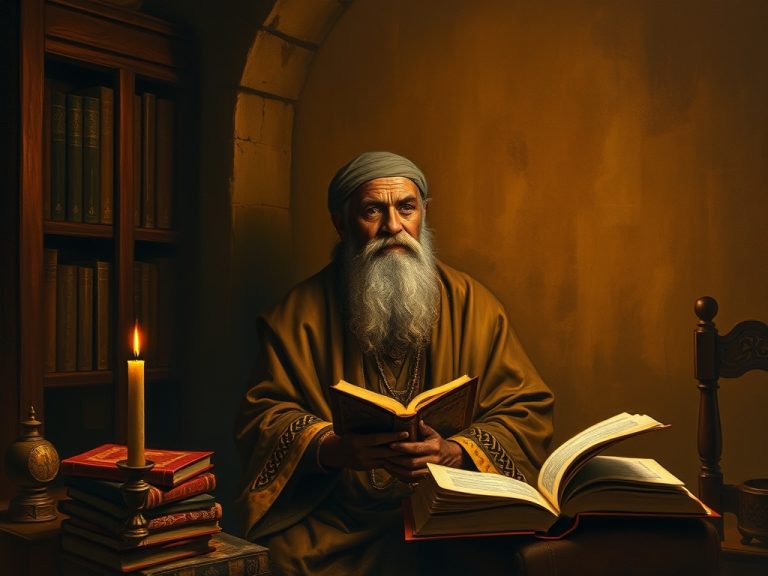
The roots of New Thought trace back to Phineas Parkhurst Quimby, a clockmaker from Maine who, in the 1830s and 1840s, became fascinated with mesmerism (what we’d now call hypnosis). Through his experiments, Quimby became convinced that disease was caused by false beliefs and that correcting those beliefs could cure the body.
Quimby never used the term “New Thought,” but his core idea, that mind is the primary reality and that changing mental states changes physical conditions, became the seed from which the entire movement grew. He treated patients by helping them identify and release the beliefs that were producing their symptoms. His success rate was remarkable enough to attract significant public attention.
Among Quimby’s patients and students were several figures who would go on to shape American religion: Mary Baker Eddy (who founded Christian Science), Warren Felt Evans (who wrote the first New Thought books), and Julius and Annetta Dresser (who became prominent New Thought teachers).
The Formalization of New Thought
By the 1880s, Quimby’s ideas had been developed into a coherent philosophical system by multiple independent teachers. The movement coalesced around several key principles:
- God (or Infinite Intelligence) is the fundamental reality
- Human consciousness is an expression of this divine intelligence
- Thought and feeling are creative forces that shape experience
- Disease, poverty, and unhappiness are the results of wrong thinking
- Correcting thought patterns through affirmation, prayer, and mental discipline produces healing and abundance
Organizations formed. The Divine Science Church, the Unity Church, and the Church of Religious Science all emerged from this intellectual ferment between 1880 and 1920. Each had its own emphasis, but all shared the fundamental New Thought premise: consciousness creates reality.
The Bridge to Neville
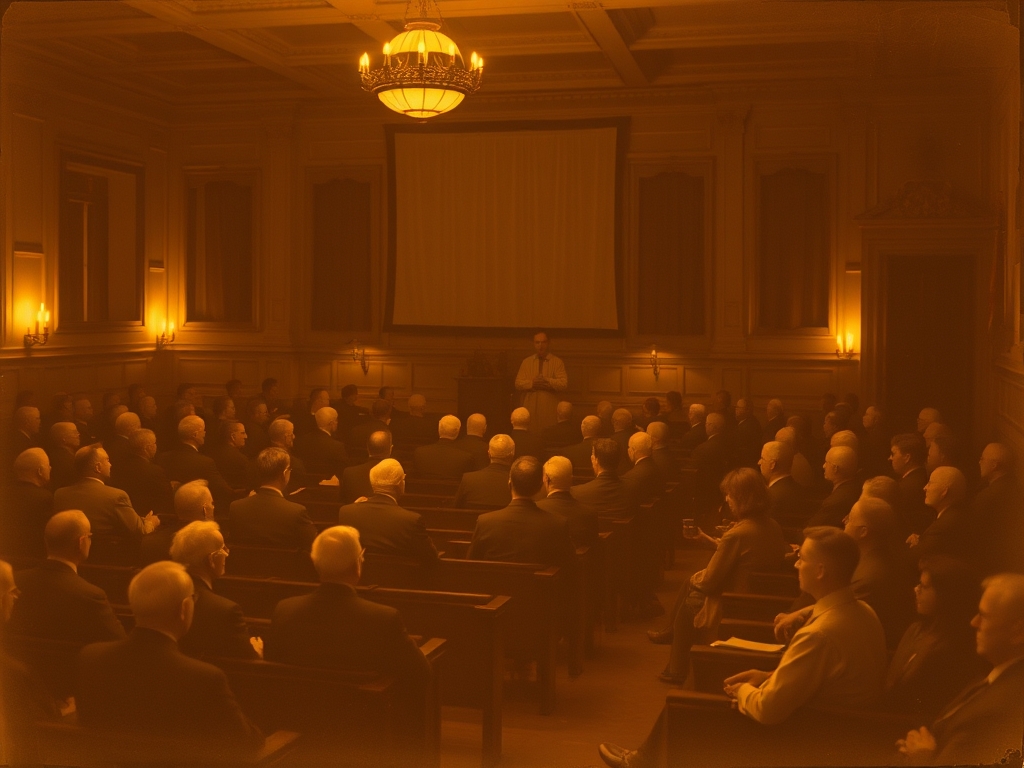
Neville Goddard arrived in New York from Barbados in 1922, entering a city that was already saturated with New Thought teaching. Lectures on the power of mind were being given in hotel ballrooms and rented halls across Manhattan. Books on mental science and positive thinking were selling briskly. The cultural ground was prepared.
Neville’s distinctive contribution was to push the New Thought premise to its logical extreme. Where earlier teachers said “your thoughts influence reality,” Neville said “your imagination IS reality.” Where they said “God helps those who align with divine principles,” Neville said “you ARE God, and your awareness of being is the creative power.”
“Man’s chief delusion is his conviction that there are causes other than his own state of consciousness.”Neville Goddard
This radical position went further than most New Thought teachers were willing to go. They generally maintained a distinction between the human mind and the divine mind. Neville collapsed that distinction entirely. Your awareness, right now, is God operating.
Murphy’s New Thought Roots
Joseph Murphy’s connection to New Thought is even more direct. He was ordained as a minister in the Church of Divine Science, one of the major New Thought denominations, and served as the minister of the Church of Divine Science in Los Angeles for nearly three decades. His teachings are firmly within the New Thought tradition, presented with a scientific gloss that made them accessible to mid-century audiences.
“Your subconscious mind does not argue with you. It accepts what your conscious mind decrees.”Joseph Murphy
Murphy’s language of “subconscious mind” replaced the earlier New Thought language of “divine mind” or “infinite intelligence” (though he used those terms too). This shift made the teaching more palatable to an increasingly secular culture while preserving the core principle: inner states create outer conditions.
What New Thought Got Right (And What It Missed)
The New Thought movement deserves enormous credit for several things. It democratized mysticism. Before New Thought, the idea that ordinary people could direct their spiritual experience was largely confined to monastic traditions and esoteric schools. New Thought said: you don’t need a priest, a guru, or an initiation. You have direct access to creative power through your own mind.
It also insisted on practical results. Unlike traditions that promised rewards in the afterlife, New Thought demanded evidence in this life. If the principles work, they should produce tangible improvements in health, wealth, and relationships. This insistence on demonstration is what made Murphy’s work so compelling and what Neville captured in The Law and the Promise.
What the movement sometimes missed was depth. In its enthusiasm for positive thinking, New Thought could become superficial, ignoring the shadow side of the psyche and the genuine complexity of human suffering. Yogananda’s tradition, with its emphasis on meditation, karma, and spiritual discipline, provides a corrective that the New Thought movement alone sometimes lacks.
Exercise: Trace Your Own Lineage
Take a belief you hold about consciousness and creation. Now trace it backward. Where did you first encounter it? Who taught the person who taught you? You’ll likely find that the chain leads back, in some form, to the New Thought movement of the nineteenth century. Understanding your intellectual lineage deepens your practice because you’re no longer working with isolated techniques. You’re participating in a tradition that has been refined over more than 150 years of practice and observation.
The next time you do your SATS or repeat an affirmation, remember: you’re standing in a stream of thought that stretches back through Neville and Murphy, through the New Thought churches, through Quimby’s consulting room in Maine, and ultimately to the ancient premise that consciousness is the fundamental reality. You’re not alone in this practice. You’re part of a lineage.