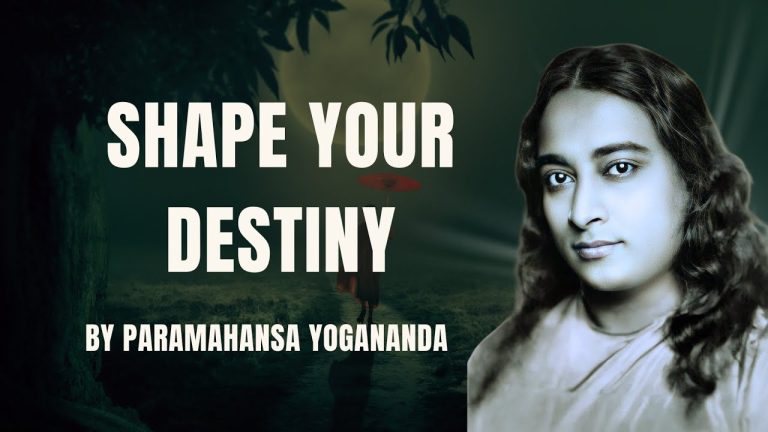
There’s a loneliness that no human relationship can touch. I don’t mean the kind that shows up when you’re physically alone, I mean the deeper ache, the one that persists even when you’re surrounded by people who love you. I lived with that ache for years before I understood what it was. Then I picked up The Divine Romance by Paramahansa Yogananda, and something inside me finally had a name for what it had been reaching toward.
This book didn’t just teach me about God. It reframed my entire understanding of love.
A Book That Reads Like a Love Letter
The Divine Romance is the second volume of Yogananda’s collected talks and essays, published posthumously by Self-Realization Fellowship. It covers an enormous range of topics, from the nature of evil to the science of healing to the art of getting along with people. But the thread that runs through every page is love. Not sentimental love. Not romantic love in the ordinary sense, but the fierce, all-consuming love between the soul and its Source.
What struck me the first time I read it was how personal Yogananda makes God. This isn’t theology at arm’s length. He speaks of the Divine the way you’d speak of someone you’re madly in love with, someone whose absence is unbearable and whose presence dissolves every problem.
“If you could feel even a particle of divine love, so great would be your joy, so overpowering, you could not contain it.”
– Paramahansa Yogananda
When I first read that line, I felt my chest tighten. Not from sadness, but from recognition. I’d had small glimpses of that kind of love, in deep meditation, in rare moments of complete stillness, and I knew Yogananda wasn’t exaggerating. He was describing something real, something I’d only tasted in drops but that he seemed to live in continuously.
Why “Romance” Is the Right Word
The idea of a divine romance can sound strange if you’ve grown up with a concept of God as a distant judge or an impersonal force. I certainly struggled with it. My mind kept wanting to make God into a concept, an abstraction, something I could file away in the “beliefs” category and move on. But Yogananda insists, with an intensity that’s almost uncomfortable, that God is a Person. Not a person with a body sitting on a throne, but a conscious, responsive, deeply intimate Presence that knows you better than you know yourself and loves you more than you can comprehend.
The bhakti tradition in India has always understood this. The great devotional poets, Mirabai, Kabir, Tulsidas, wrote about God as Lover, Friend, Child, Mother. They weren’t being metaphorical. They were describing their actual experience. Yogananda stands squarely in this tradition, but he translates it for a Western audience with remarkable clarity.
He writes about how every human love is actually a distorted reflection of divine love. That desperate need to be understood by your partner, that ache to merge completely with another person, it’s the soul’s longing for God, redirected toward a human being who can never fully satisfy it. I’ve seen this pattern in my own life so many times. The relationships that consumed me most were the ones where I was unconsciously trying to get from another person what only the Infinite could provide.
The Sting of Divine Silence
One of the most honest and moving sections of the book deals with the periods when God seems to withdraw. Yogananda doesn’t sugarcoat this. He talks about the dark nights when you meditate and feel nothing, when your prayers seem to bounce off the ceiling, when the sweetness you once felt is replaced by dryness and doubt.
“The Lord will not come to you as long as you want anything else more than you want Him. You have to want God as the drowning man wants air.”
– Paramahansa Yogananda
This hit me hard because I’d been through exactly that kind of spiritual dryness. Months where my meditation practice felt mechanical, where I wondered if I’d imagined the whole thing. Yogananda’s explanation is that God sometimes hides to intensify our longing. It’s not punishment, it’s a deepening of the relationship. The lover who’s always available is taken for granted. The Beloved who occasionally withdraws makes the heart grow wilder with desire.
I’m not sure I fully agree with framing it that way, there’s something in me that resists the idea of a God who plays hide-and-seek. But I can’t deny that my most powerful spiritual experiences have come after periods of emptiness. The drought makes the rain sacred.
What This Book Changed in My Daily Life
Before reading The Divine Romance, my spiritual practice was largely mental. I’d study consciousness, practice Neville Goddard’s techniques, work with affirmations and visualization. All of that was powerful. But it was mostly happening from the neck up. Yogananda introduced me to the dimension of feeling. Not emotion exactly, but devotion. The heart’s own form of knowing.
I started talking to God. Not reciting prayers, but actually talking, out loud sometimes, silently other times. In the morning before meditation, I’d say something like, “I know you’re here. Help me feel you today.” It felt awkward at first. Childish, even. But something shifted. My meditations got deeper. Coincidences multiplied. I started feeling a warmth in my chest during ordinary moments, washing dishes, walking to the store, that I can only describe as being accompanied.
The book also changed how I relate to other people. When you start to see every person as a disguise God is wearing, your irritation softens. Your patience grows. Not perfectly, not all the time, I still get annoyed in traffic, but the baseline shifted. There’s a tenderness underneath now that wasn’t there before.
A Practice from the Heart of This Book
Here’s something I adapted from Yogananda’s teachings in The Divine Romance that has become one of my most cherished practices:
The Beloved Meditation
Sit quietly and close your eyes. Take a few slow breaths to settle yourself. Now, instead of trying to concentrate on a mantra or a technique, simply feel love. Think of the person, animal, place, or memory that most easily opens your heart. Let that warmth fill your chest. Stay with it for a minute or two.
Then, gently redirect that love upward and inward. Imagine that the love you feel isn’t going to something but coming from something, from a Presence behind your own awareness. Let yourself receive it. You might whisper internally, “I feel You here.” Don’t force anything. Just stay open, the way you’d stay open if someone you loved deeply was about to walk into the room.
Sit with this for ten to twenty minutes. Some days you’ll feel very little. Other days, you may be surprised by a sweetness that brings tears. Both are fine. The practice is the offering, not the result.
I’ve done this almost every morning for the past year, and it has become the anchor of my day. It’s changed my meditation from something I do to something I enter.
Who Should Read This Book
If your spiritual life has become too intellectual, too much thinking, analyzing, and debating, this book is medicine. If you’ve been practicing manifestation techniques and they work but something still feels missing, The Divine Romance might show you what that missing piece is. And if you’ve ever felt a love so big it scared you, a love that seemed to come from beyond your own personality, this book will tell you exactly what that was and invite you to follow it all the way home.
I won’t pretend every chapter resonated with me equally. Some of the talks are more dated than others, and Yogananda’s style can occasionally feel repetitive. But the core message, that the deepest human need is not for success, health, or even human love, but for conscious union with the Divine, that message pierced me. It’s still piercing me.
I keep The Divine Romance on my nightstand. I don’t read it cover to cover anymore. I open it at random, read a few paragraphs, and let whatever I find sit with me through the day. More often than not, it’s exactly what I needed to hear. Almost as if Someone knew I’d open to that page.
Almost.