There’s a moment, and if you’ve experienced it, you’ll know exactly what I mean, when a teacher says something that doesn’t just land in your mind but drops straight into the center of your chest. You don’t learn it. You recognize it. And in that recognition, you realize the teacher didn’t give you anything new. They pointed you back to something you’d somehow always carried.
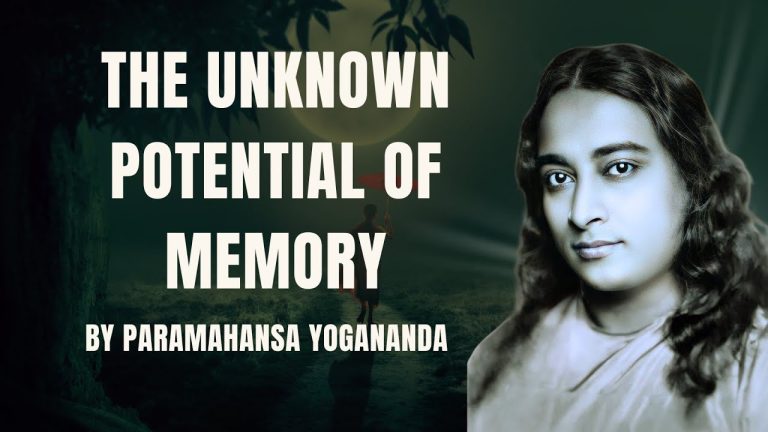
That moment changed how I understood everything Paramahansa Yogananda wrote about the guru. Because I’d gotten it wrong for years. I thought the guru was the destination, the enlightened being you surrender to, the authority who tells you what’s real. But Yogananda kept saying something far stranger and more radical: the true guru’s job is to make themselves unnecessary.
The Misunderstanding That Keeps Us Seeking
I spent a long time chasing teachers. Books, lectures, retreats, always looking for the next person who could hand me the missing piece. And there’s nothing wrong with learning from others. But I was doing something subtler and more insidious: I was outsourcing my own inner authority. Every time a question arose in me, my first instinct was to ask someone else. Not to sit with it. Not to go inward. To reach outward.
Yogananda addressed this tendency directly. He didn’t reject the role of the teacher, far from it. He revered his own guru, Sri Yukteswar, with a devotion that’s palpable on every page of Autobiography of a Yogi. But he was precise about what that relationship was actually for.
“The Guru is not a person. The Guru is the divine wisdom that flows through a human channel to awaken the same wisdom in the disciple.”
– Paramahansa Yogananda
Read that again slowly. The guru is not a person. The guru is wisdom flowing through a person. And its purpose isn’t to create dependency, it’s to awaken the same wisdom that already lives inside the student. The external teacher exists to activate the internal one.
This distinction matters enormously, and I think it’s where a lot of spiritual seekers get stuck. We find a teacher whose words resonate, and instead of letting those words turn us inward, we fixate on the teacher. We collect their quotes. We study their biography. We try to become their version of awakened rather than discovering our own.
What Sri Yukteswar Actually Taught Yogananda
One of the things I find most striking about Yogananda’s accounts of Sri Yukteswar is how uncomfortable the relationship often was. Sri Yukteswar wasn’t warm and affirming in the way we might expect a spiritual master to be. He was blunt. He challenged Yogananda. He refused to coddle him.
And this, I’ve come to believe, was entirely the point. Sri Yukteswar wasn’t trying to make Yogananda feel good, he was trying to push Yogananda past the need for external validation altogether. Every correction, every moment of seeming harshness, was an invitation: stop looking at me and start looking at what’s real within you.
Yogananda described how Sri Yukteswar would sometimes answer a question with silence, or with a question of his own, or with what seemed like an unrelated remark. At first, young Mukunda (Yogananda’s birth name) found this frustrating. Later, he realized his guru was training him to find answers through direct inner perception rather than through intellectual explanation.
“The season of failure is the best time for sowing the seeds of success.”
– Paramahansa Yogananda
I used to read that quote as motivational advice, keep going when things are hard. But now I hear something deeper in it. The “failure” Yogananda is describing includes the failure of external sources to satisfy us. When no teacher, no book, no retreat gives us what we’re looking for, that is when we’re finally ready to turn inward. The exhaustion of seeking outward becomes the seed of discovering inward.
The Inner Guru Isn’t a Metaphor
Here’s where Yogananda’s teaching gets genuinely radical, at least for Western ears. He wasn’t speaking poetically when he talked about the guru within. He meant it literally. He taught that every human being has access to an inner faculty of direct knowing, what he called intuition, that doesn’t depend on reasoning, education, or external input.
This isn’t the vague “trust your gut” advice that floats around self-help circles. Yogananda was specific: intuition is the soul’s capacity to know truth directly, and it’s developed through sustained meditation practice. It’s not something you’re born with in full flower. It’s something you cultivate. And the external guru’s deepest role is to give you the tools, the meditation techniques, the disciplines, that develop this inner faculty.
I’ve tested this in my own life, imperfectly and inconsistently, and I can tell you it’s real. There’s a quality of knowing that arises in deep stillness that’s categorically different from thinking. It doesn’t argue or deliberate. It simply presents clarity. And the more I’ve practiced sitting with questions rather than immediately researching answers, the more I’ve noticed this faculty strengthening.
It’s not always dramatic. Sometimes it’s just a quiet sense of “yes” or “not yet” when I’m facing a decision. Sometimes it’s a sudden understanding of a situation that my analytical mind had been chewing on for weeks. But it comes from a different place than thought, and it has a different quality, a settledness, a completeness that thinking never quite achieves.
Why We Resist Turning Inward
If the inner guru is real and accessible, why do we keep looking outside? I’ve sat with this question honestly, and my answer is: because looking inward is terrifying. When you turn your attention inward, you don’t just find wisdom. You find everything you’ve been avoiding. The doubts, the pain, the unprocessed grief, the parts of yourself you’d rather not acknowledge.
An external teacher gives us somewhere to put our attention that feels spiritual but is still, fundamentally, outside. It’s still distraction dressed in sacred clothing. And I say this with compassion for myself and everyone else who’s done it, because it’s the most natural thing in the world.
But Yogananda’s teaching is uncompromising on this point: there is no substitute for going inward. The external teacher can inspire you, guide you, give you techniques, but at some point, you have to close your eyes, sit with yourself, and do the work that no one else can do for you.
A Practice for Developing the Inner Teacher
This is something I’ve adapted from Yogananda’s teachings on intuition, simplified for daily life.
Choose a question you’re genuinely uncertain about. Not something trivial, but a real decision or confusion you’re carrying. Write it down clearly in a single sentence.
Sit comfortably and close your eyes. Spend five minutes simply watching your breath without trying to control it. Let your body settle. Let the mental noise do its thing without engaging it.
After five minutes, bring your question gently to mind (not as a problem to solve, but as something you’re offering up. Place it) so to speak, at the point between your eyebrows (what Yogananda called the “spiritual eye” or seat of concentration). Then let it go. Don’t think about it. Just sit in receptive stillness for another five to ten minutes.
When you open your eyes, write down whatever comes, even if it seems unrelated, even if it’s just a feeling tone or a single word. Don’t judge it or analyze it.
Do this for seven consecutive days with the same question. What I’ve found is that by day three or four, something begins to clarify. Not always as a direct answer, but as a shift in how I relate to the question. Sometimes the question itself dissolves, and I realize I was asking the wrong thing entirely.
The key is consistency and non-interference. You’re not trying to produce an answer. You’re creating conditions for the inner teacher to speak, and then getting out of the way.
The Guru Relationship, Rightly Understood
None of this means external teachers don’t matter. They matter enormously. I still read Yogananda. I still turn to the words of teachers who’ve gone deeper than I have. But the relationship has changed. I no longer go to these teachers hoping they’ll give me something I lack. I go to them the way you’d go to a mirror, to see more clearly what’s already present.
That shift, from seeking what I don’t have to recognizing what I do, has been the quietest and most significant change in my inner life over the past several years. And I believe it’s exactly what Yogananda was pointing toward all along. The guru within isn’t waiting for you to become worthy of it. It isn’t hiding behind some prerequisite of spiritual attainment. It’s here, right now, in this breath, in this moment of reading, the same awareness that looks through your eyes and wonders about the truth.
The external teacher’s greatest gift isn’t knowledge. It’s the confidence to trust what you find when you finally, fully turn inward.