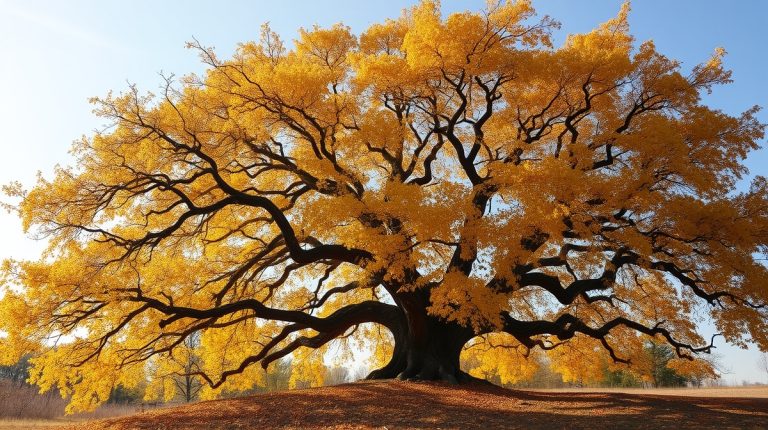
I was sitting in a park one autumn afternoon, no particular reason, no agenda, just sitting, when something happened that I still can’t fully explain. For about thirty seconds, every layer of worry, identity, and mental noise fell away, and what was left was pure, uncaused joy. Not happiness about something. Not satisfaction from an achievement. Just joy, radiant, simple, and completely without reason.
It passed quickly. Within a minute, my thinking mind was back, already trying to analyze what had happened. But that brief window left a mark on me that hasn’t faded. Because it raised a question I couldn’t ignore: if joy can arise without any external cause, where does it come from?
The Taittiriya Upanishad answered that question three thousand years ago.
The Five Sheaths, A Map of Who You Are
The Taittiriya Upanishad is one of the oldest spiritual texts in the world, part of the ancient Vedic tradition of India. And its central teaching is a breathtaking map of human identity, a layered model that moves from the outermost, most visible aspect of the self to the innermost, most hidden.
The text describes five “sheaths” or layers of being, called koshas. Think of them as concentric circles, each one containing something deeper:
Annamaya Kosha, The Physical Body
The outermost layer. The body you feed and clothe, the body that gets tired and ages. Most of us identify with this layer almost exclusively. We think we are our bodies.
Pranamaya Kosha, The Breath and Vital Energy
Beneath the physical body is the layer of life force, the energy that animates the body, the breath that flows in and out. When this energy is strong, you feel alive and vibrant. When it’s depleted, you feel exhausted, even if your body is technically healthy.
Manomaya Kosha, The Mind and Emotions
Deeper still is the layer of thoughts, feelings, and sensory perceptions. This is where most of our daily experience lives, the constant stream of thinking, reacting, planning, and remembering.
Vijnanamaya Kosha, Wisdom and Discernment
Beneath the reactive mind is a layer of deeper knowing, intuition, insight, the capacity to discern truth from illusion. This is the part of you that “just knows” something, even when your rational mind hasn’t figured it out yet.
Anandamaya Kosha, The Sheath of Bliss
And at the very center, deeper than the body, deeper than the breath, deeper than the mind, deeper than wisdom itself, is bliss. Ananda. Pure, uncaused joy. The Taittiriya Upanishad declares this as the innermost nature of every human being.
“From bliss, all beings are born. By bliss, they are sustained. Into bliss, they return at the end.” – Taittiriya Upanishad, Brahmananda Valli, Section 6 (translated by Swami Gambirananda)
When I read that passage, I felt the same shock of recognition I’d felt in the park that afternoon. The text was describing, in precise spiritual language, what I’d accidentally stumbled into. Joy isn’t something you find at the end of a long search. It’s what you’re made of. It’s what’s left when everything else is peeled away.
Why We Don’t Feel Blissful
If bliss is our deepest nature, why are most of us so rarely in contact with it? The Upanishad’s answer is elegant: the outer sheaths obscure the inner ones. We’re so identified with our body, our energy levels, our thoughts, and our emotions that we never penetrate to the layer beneath them all.
It’s like living in a house with five rooms, but never going past the first two. The innermost room, the one with the treasure, is always there. But if you spend your entire life in the entryway, you’ll never know what’s deeper inside.
I see this in my own experience constantly. On busy days, when I’m identified with my to-do list and my stress levels, bliss seems like a fairy tale. But on quieter days, when I meditate deeply or simply slow down enough for the mental noise to subside, that same uncaused joy begins to surface. Not because I created it, but because I stopped burying it.
Bliss Is Not Pleasure
I want to be clear about a distinction the Upanishad makes implicitly, because it’s easy to confuse: ananda (bliss) is not sukha (pleasure). Pleasure is a response to external conditions, good food, pleasant weather, a compliment, a successful project. Pleasure depends on circumstances. When the circumstances change, the pleasure ends.
Bliss doesn’t depend on anything. It’s not a reaction. It’s a ground state. It’s what consciousness feels like when it’s not agitated, not grasping, not running from anything. It’s the natural condition of awareness when all the layers of disturbance have settled.
This distinction changed how I approach my spiritual practice. I stopped chasing peak experiences, those intense moments of ecstasy that come and go. Instead, I started looking for the quieter, steadier joy that’s available whenever I’m willing to get still enough to feel it.
“He who knows the bliss of Brahman, whence all words turn back together with the mind, not having reached it, he fears nothing whatsoever.” – Taittiriya Upanishad, Brahmananda Valli, Section 9 (translated by Swami Gambirananda)
That phrase, “he fears nothing whatsoever”, struck me deeply. Because in my experience, when that uncaused joy surfaces, fear genuinely does disappear. Not because I’m being brave, but because fear and bliss can’t occupy the same space. When bliss is present, there’s simply no room for fear. It’s not a battle. It’s a displacement.
How to Practice Moving Through the Sheaths
The Taittiriya Upanishad doesn’t provide a step-by-step meditation technique, it’s a philosophical and devotional text, not a practice manual. But over the years, I’ve developed a practice based on its five-sheath model that has consistently brought me closer to that inner layer of bliss. I think of it as “moving inward through the koshas.”
Begin with the body (Annamaya). Sit comfortably and bring your full attention to physical sensations. The weight of your body. The touch of fabric on skin. The temperature of the air. Spend two minutes simply being aware of the physical layer of your existence. Don’t try to relax, just notice.
Move to the breath (Pranamaya). Shift your attention to breathing. Feel the breath enter and leave. Notice the subtle energy that each breath carries. Feel the aliveness in your body, the tingling in your hands, the warmth in your chest. Spend two minutes here.
Move to the mind (Manomaya). Now notice your thoughts. Don’t follow them, just watch them arise and pass. Observe emotions as they surface. See the entire layer of mental activity as a kind of weather, constantly moving, constantly changing. Two minutes.
Move to awareness itself (Vijnanamaya). This is subtler. Ask yourself: “Who is watching these thoughts?” Shift your attention from the thoughts to the one who is aware of the thoughts. There’s a spaciousness here that’s hard to describe, a quiet clarity that’s separate from the content of your mind. Rest here for two minutes.
Sink into what remains (Anandamaya). Now let go of even the observer. Don’t try to be aware. Don’t try to do anything. Just… let go completely. If there’s a feeling that arises, a warmth, a lightness, a quiet joy with no object, let it be. Don’t grab it. Don’t name it. Just rest in whatever is present when everything else has been released.
The whole practice takes about ten to twelve minutes. Some days, I barely get past the mental layer before my timer goes off. Other days, I sink quickly to that quiet place where joy lives without a reason. Both kinds of sessions are valuable. The point isn’t to have a bliss experience every time. The point is to familiarize yourself with the territory, to know, from direct experience, that there are layers to who you are, and the deepest one is not suffering. It’s joy.
What the Upanishad Means for Daily Life
The Taittiriya Upanishad’s teaching on bliss isn’t meant to be a comforting idea you think about occasionally. It’s meant to restructure how you understand yourself and your experience. If your deepest nature is joy, then sadness, anxiety, frustration, and despair, however real they feel, are surface phenomena. They’re weather on the outer sheaths. They’re not the core of who you are.
I don’t say this to minimize suffering. Pain is real. Loss is real. But I’ve found that even in the midst of difficult experiences, there’s a part of me that remains untouched, a quiet hum of okayness beneath the turmoil. The more I practice, the more accessible that hum becomes.
The ancient teachers who composed the Taittiriya Upanishad weren’t writing poetry for its own sake. They were recording what they’d discovered through deep inner inquiry: that at the bottom of everything, beneath the body, beneath the breath, beneath the mind, beneath even wisdom, there is bliss. And that bliss is not something you earn or achieve. It’s something you are.
That afternoon in the park, when joy arose without cause, I wasn’t experiencing something extraordinary. I was, for thirty seconds, experiencing something ordinary, the most ordinary thing in the universe: my own nature, unobscured. The Upanishad says that nature has been there since before you were born and will be there after everything else falls away. The only work is to stop covering it up.