The Day My Father Stopped Working
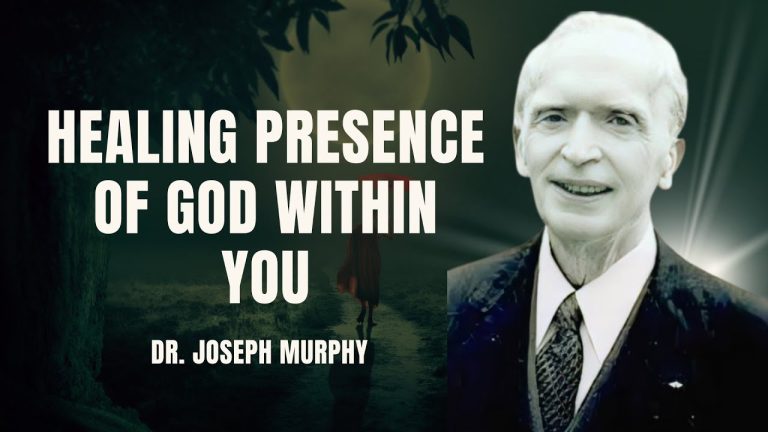
My father retired at sixty-two. For the first three months, he seemed happy, sleeping in, reading the paper, puttering around the house. By month four, something had shifted. He was irritable, foggy, and spent hours staring at television without really watching it. By month six, he told me he felt like he’d “checked out of life.” That conversation stayed with me, and when I later read what Joseph Murphy had to say about retirement and the mind, I felt a chill of recognition.
Murphy, best known for The Power of Your Subconscious Mind, had strong and specific views about what happens to people when they stop engaging mentally, and what they could do about it. His advice wasn’t about staying busy for its own sake. It was about understanding the relationship between your thoughts, your subconscious programming, and the vitality of your body and mind.
Murphy’s Warning About Mental Retirement
Murphy drew a sharp distinction between retiring from a job and retiring from life. The first, he said, could be wonderful. The second was dangerous.
“Retire from your job but never retire from life. Be sure to have a plan, a purpose, and a reason for getting up in the morning.”
– Joseph Murphy (1963), Chapter 19
He observed that many people who retired without a clear mental direction began to deteriorate rapidly. Not because of age itself, but because they’d given their subconscious mind a devastating instruction. By telling themselves they were “done,” they were programming their deeper mind to begin shutting down. The subconscious, Murphy taught, takes your dominant beliefs and feelings as orders. Tell it you’re finished, and it will oblige.
This wasn’t just philosophical musing. Murphy cited examples in his lectures and writings of people who retired and quickly developed health problems, depression, or cognitive decline. Not from any physical cause, but from what he called “mental and spiritual atrophy.” The mind, deprived of purpose and challenge, begins to wither. And since Murphy believed the subconscious mind governs the body’s functions, a withering mind leads to a withering body.
The Subconscious Doesn’t Know You’ve Retired
One of Murphy’s most useful insights is that the subconscious mind doesn’t distinguish between “real” and “imagined” with the same sharpness that the conscious mind does. It responds to the feelings and images you feed it. This means that retirement doesn’t have to signal decline, unless you allow it to.
If you wake up each morning with curiosity, with something you want to learn or create or give, your subconscious receives a message of vitality. If you wake up each morning with nothing ahead of you, your subconscious receives a message of purposelessness. Over time, it acts on whichever message is dominant.
“Age is not the flight of years but the dawn of wisdom. Welcome each year as a new opportunity to express more of God’s wisdom and love.”
– Joseph Murphy (1963), Chapter 19
I found this reframing genuinely helpful. Murphy wasn’t denying that bodies age. He was insisting that the rate and quality of that aging is heavily influenced by mental habits. And mental habits, unlike chronological age, are something you can change.
What Murphy Recommended
Murphy’s advice for retirees was practical and specific. He didn’t offer vague encouragement to “stay positive.” He gave concrete directions rooted in his understanding of how the subconscious works.
First, he emphasized the importance of ongoing mental engagement. Study something new. Take up a subject you’ve always been curious about. Murphy himself was a voracious student of world religions, philosophy, and science well into his later years. He saw intellectual curiosity not as a luxury but as a survival mechanism for the mind.
Second, he stressed contribution. The subconscious mind, he taught, thrives on the feeling of being useful. When you contribute something, wisdom, time, skill, kindness, you generate the inner feeling of being needed and alive. That feeling programs the subconscious for continued vitality.
Third, and this is the part that resonated most with me, he recommended a specific mental practice. Before sleep each night, he suggested that retirees affirm, with feeling, that they are growing wiser, more creative, and more alive with each passing day. Not as empty words, but as a genuine instruction to the subconscious mind.
What I Saw With My Own Father
After reading Murphy, I shared some of these ideas with my dad. He was skeptical at first, he’s not a “self-help” person. But he was also miserable enough to try something. He didn’t start doing affirmations (he would have rolled his eyes at the word), but he did start doing two things that aligned with Murphy’s principles.
He enrolled in a community woodworking class. And he started volunteering at a local literacy program, helping adults learn to read. Both of these gave him structure, social connection, and, crucially, the feeling that he was still a capable, contributing human being.
Within a few months, the fog lifted. He was sharper in conversation, more energetic, even sleeping better. He told me, somewhat sheepishly, that he felt “like myself again.” I don’t think it was magic. I think his subconscious mind had received a new set of instructions, and it was following them.
The Fear of Irrelevance
Murphy understood something that most retirement advice misses: the deepest fear of retirement isn’t financial. It’s the fear of becoming irrelevant. Of being discarded by a world that valued you only for your productivity.
This fear, when left unaddressed, programs the subconscious with messages of worthlessness. And the subconscious, being the faithful servant Murphy described, begins to manifest that worthlessness as physical and mental decline.
The antidote isn’t to pretend you’re still twenty-five. It’s to genuinely believe, and to feel, that your value as a human being isn’t tied to your job title or your paycheck. That you have wisdom, perspective, and capacity that the world still needs. That the best years, in terms of inner richness, might actually be ahead of you.
Murphy wasn’t naive about this. He knew it required real inner work, not just positive thinking. It required confronting decades of subconscious programming that equated worth with productivity, identity with occupation, and aging with decline.
Murphy’s Evening Practice for Retirees
Here’s an exercise drawn from Murphy’s principles that I’ve adapted for anyone approaching or already in retirement.
Each evening, as you’re falling asleep, bring to mind one moment from your day when you felt genuinely engaged, a conversation that interested you, a problem you solved, a skill you practiced, a person you helped. If no such moment comes to mind, imagine one for tomorrow. See yourself doing something that makes you feel alive and useful.
Hold that image gently. Don’t strain. Let the feeling of engagement and purpose wash through you as you drift off. You’re speaking directly to your subconscious mind in the language it understands best, feeling and imagery.
Do this nightly for thirty days. Murphy would tell you that you’re not just doing a relaxation exercise. You’re reprogramming the deepest part of your mind to expect vitality, purpose, and growth rather than decline.
Retirement as a Beginning
Murphy’s view of retirement was ultimately optimistic, but it was an optimism that demanded participation. He didn’t promise that everything would be fine if you just thought happy thoughts. He said that if you deliberately engaged your subconscious mind with images and feelings of purpose, creativity, and contribution, it would respond by keeping your mind sharp and your body resilient.
I’ve watched this principle play out in my father’s life. I’ve seen it in others who approach their later years with curiosity rather than resignation. And I’ve internalized it for myself, knowing that the mental habits I build now will determine not just how I retire, but whether retirement becomes an expansion or a contraction.
Murphy put it simply: your subconscious mind will take you wherever your dominant thoughts lead. In retirement, for the first time, you get to choose those thoughts without the noise of a demanding career drowning them out. That’s not an ending. That’s an extraordinary opportunity.