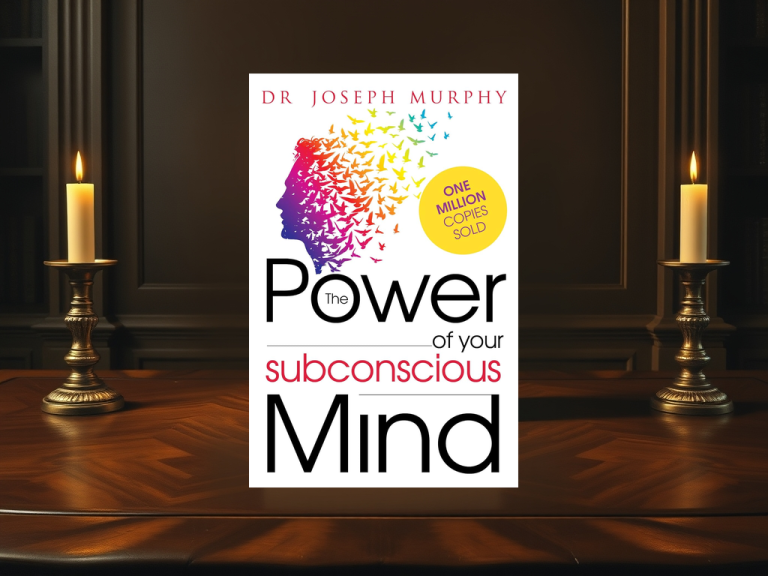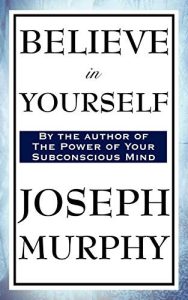
After devouring The Power of Your Subconscious Mind, I went on a Joseph Murphy binge. Bought six of his books in one order. Believe in Yourself was the thinnest (barely 80 pages) so I started there, expecting a quick, powerful supplement to the big book.
What I got was something more mixed. There’s genuine wisdom here, delivered in Murphy’s characteristically warm and accessible voice. But there’s also a lot of repetition, some questionable anecdotes, and a structure that feels more like a collection of Sunday sermons than a coherent book. It punches above its weight in moments, but it also meanders in ways the page count can’t really afford.
The Core Message
Murphy’s argument is that belief (specifically, the deep-seated beliefs held in your subconscious mind) shapes every aspect of your life. Not surface-level positive thinking, but the bedrock convictions about who you are and what’s possible for you. When those beliefs align with what you want, life seems to cooperate. When they don’t, you can work as hard as you like and still run into invisible walls.
So far, so standard for Murphy. But Believe in Yourself goes a step further than some of his other works. He specifically addresses the relationship between self-image and external results: the idea that you can’t outperform your own self-concept. If you believe, at the deepest level, that you don’t deserve success, or that good things don’t happen to people like you, no amount of technique will override that belief until you change it.
“The man who is afraid of failure has already failed. The man who is confident of success has already succeeded in his own mind.”
– Joseph Murphy, Chapter 2
That’s Murphy in a nutshell, clear, direct, slightly oversimplified, but pointing at something real. There IS a relationship between inner expectation and outer results that anyone who’s honest with themselves can observe. Whether it works through metaphysical mechanisms or psychological ones (confidence breeds better decisions, which breed better outcomes) almost doesn’t matter. The practical implications are the same.
The Parts That Land
The strongest section of the book deals with what Murphy calls “the self you believe yourself to be.” He argues that most people carry an unconscious self-portrait that they assembled in childhood from the opinions of parents, teachers, and peers. This self-portrait (not their actual abilities) determines what they attempt, how hard they persist, and what they believe they deserve.
Murphy’s suggestion is radical in its simplicity: identify the self-portrait, then consciously replace it. Not with empty affirmations, but with a new image held in the subconscious through repetition and feeling. He compares it to overwriting a computer program, the old program keeps running until you install a new one.
This predates modern work on self-concept change by decades, and the psychological research has broadly supported the principle. Your self-concept does constrain your behavior, and changing it does change outcomes. Murphy was onto something real here, even if his language and methods were prescientific.
The Parts That Don’t
The book’s biggest weakness is its anecdotes. Murphy tells stories about people who transformed their lives through belief, a struggling salesman who became the top performer, a woman who believed her way into a happy marriage, a businessman who overcame failure through changed thinking. The stories are told with such uniform success and such scant detail that they read more like parables than reports.
Worse, several stories feel recycled from The Power of Your Subconscious Mind, just with different names. If you’ve read the bigger book, you’ll have déjà vu. This isn’t unusual for Murphy (he was a prolific writer and speaker who frequently repurposed material) but in a book this short, recycled content stings more.
“You are the only thinker in your world. Whatever thoughts you have are creative. Your thought is creative (not because of something in it) but because of what it does to the thinker.”
– Joseph Murphy, Chapter 4
The writing style, while accessible, verges on simplistic. Murphy rarely develops a point beyond its initial statement. He’ll make a claim, illustrate it with a story, and move on, without exploring nuance, addressing objections, or going deeper. For a book aimed at people struggling with self-doubt, this lack of depth is a problem. Self-doubt has roots (trauma, systemic disadvantage, neurological patterns) and “just believe in yourself” is insufficient medicine for conditions with complex causes.
Who Murphy Was Writing For
Context matters. Murphy was a minister in the mid-twentieth century, and many of his books began as lectures to his congregation. Believe in Yourself reads like exactly that, inspirational talks aimed at everyday people who needed encouragement, not a treatise for sophisticated spiritual practitioners.
On those terms, it works. If you’re in a rough patch and need someone in your corner telling you that your self-limiting beliefs aren’t permanent fixtures, that you can change how you see yourself, that confidence is a learnable skill, Murphy delivers that pep talk with genuine warmth and care. He believed in his readers, and that belief comes through on every page.
But if you’re looking for a rigorous methodology, or if you’ve already absorbed Murphy’s core ideas from his more substantial works, this book will feel thin. Not bad, just thin.
A Practice Inspired by This Book
Murphy suggests an exercise I’ve adapted and still find useful. He calls it “the mirror technique,” though it’s not the affirmation-in-the-mirror practice you might be thinking of.
At the end of each day, sit quietly and review the day’s events. Notice every moment where you held back, shrank, deferred, or acted from a place of “I’m not enough.” Don’t judge these moments: just catalog them. Then, for each one, imagine yourself responding from a place of genuine confidence and self-worth. Not arrogance, quiet assurance. See yourself speaking up, taking action, expecting good things. Feel that version of yourself as real.
The goal isn’t to beat yourself up about the day’s shortcomings. It’s to give your subconscious a clear picture of the self you’re becoming. Do this for two weeks and notice whether your in-the-moment responses start shifting. In my experience, they do, slowly, but perceptibly.
The Honest Bottom Line
I’d give Believe in Yourself three stars. It’s not bad, Murphy is incapable of being boring, and his sincerity is genuine. But it’s also not necessary if you’ve read The Power of Your Subconscious Mind. Everything here is said better and more thoroughly in the big book. This reads like a sampler, not a main course.
If you haven’t read any Murphy and want a quick taste of his style before committing to 300+ pages, this could work as a gateway. And if you’re in a dark moment of self-doubt and need a short, warm, direct book that looks you in the eye and says “you’re more than you think you are”, this delivers that message with conviction.
But if you’re already on the Murphy train, spend your time with his deeper works. Believe in Yourself is a nice appetizer, but you’ll be hungry again in an hour.
Enjoyed this review?
Buy Believe in Yourself on Amazon As an affiliate, we may earn a small commission at no extra cost to you.