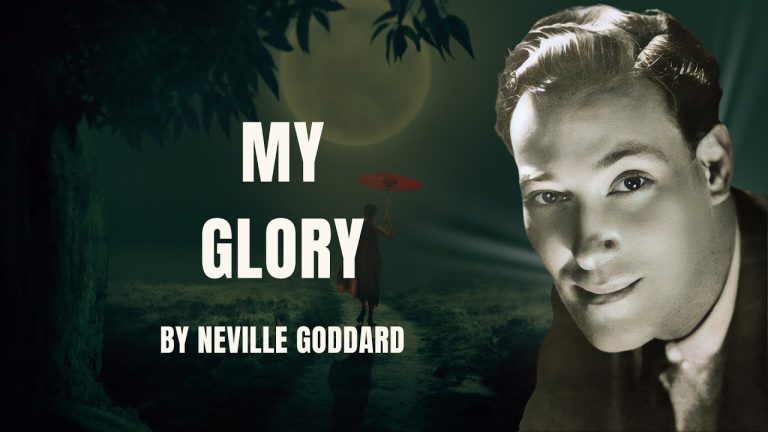
A Mystic’s Favorite Poet
If you’ve spent any time reading Neville Goddard’s lectures, you’ve noticed something: the man couldn’t stop quoting William Blake. Not casually. Not as decoration, but as though Blake had given him the key to a door he’d been searching for his entire life. In lecture after lecture, book after book, Blake’s words appear, sometimes as proof texts, sometimes as celebrations, always with a reverence that borders on devotion.
I found this fascinating when I first encountered it. Neville had studied under Abdullah, an Ethiopian rabbi and mystic. He drew from Scripture constantly. He had his own profound inner experiences to draw from. Yet it was a poet, an engraver from 18th-century London who died in relative obscurity, who seemed to speak Neville’s language most precisely.
The more I’ve read both of them, the more I understand why.
Blake’s Radical Claim About Imagination
William Blake made a statement that, if you really sit with it, rearranges your entire understanding of reality:
“The Imagination is not a State: it is the Human Existence Itself.”
– William Blake (c. 1804-1811)
For Blake, imagination wasn’t a faculty you used, like memory or reason, and then set aside. It was the core of what you are. Everything else, your physical body, the sensory world, the “facts” of your life, these were secondary, even derivative. Imagination came first.
This is exactly what Neville taught. He identified imagination with God, with the creative power of the universe, with the “I AM” of Scripture. When Neville said “imagining creates reality,” he wasn’t using a metaphor. He meant it as literally as Blake did.
I remember reading Blake’s line for the first time and feeling a kind of vertigo. If imagination isn’t something I have but something I am, then every moment of consciousness is an act of creation. Every assumption I carry, every inner conversation I entertain, every feeling I dwell in, all of it is imagination at work, shaping what I call “my life.”
The Shared Enemy: The “Ratio” and the Senses
Both Blake and Neville were at war with the same opponent, the belief that the physical senses tell us the ultimate truth about reality.
Blake called it “Single vision and Newton’s sleep”, the reduction of reality to what can be measured, weighed, and calculated. He saw the rationalist worldview not as enlightenment but as a kind of spiritual blindness, a closing of the doors of perception.
“If the doors of perception were cleansed every thing would appear to man as it is, Infinite.”
– William Blake (c. 1790-1793)
Neville echoed this constantly. He told his audiences to stop being “slaves to the evidence of the senses.” He insisted that what you see, hear, and touch is the result of previous imagination, not the cause of future experience. To look at your current circumstances and say “this is reality” was, for Neville, the fundamental error, the same error Blake had identified nearly two centuries earlier.
I’ve struggled with this idea personally. When you’re looking at a bank balance that doesn’t reflect what you want, it feels absurd to say “my imagination is more real than this number.” But both Blake and Neville would say that the bank balance is a printout, a delayed reflection of previous states of consciousness. The living reality is the state you occupy right now.
Los and Urizen, Blake’s Inner Drama
Blake created an elaborate mythology populated by figures like Los, Urizen, Orc, and Enitharmon. These weren’t characters in a fantasy novel, they were aspects of the human psyche, dramatized as cosmic beings.
Los represents the imagination, the creative fire. Urizen represents rational limitation, the part of us that draws boundaries and says “this far and no further.” In Blake’s mythology, the fall of humanity isn’t a moral failing, it’s the triumph of Urizen over Los, the moment when reason imprisoned imagination.
Neville interpreted Blake’s mythology directly through his own teaching. He saw Los as the divine imagination working in every person, constantly seeking to free itself from the chains of limiting belief. He saw Urizen as the tyranny of “facts” and “logic” that keep us trapped in states we’ve outgrown.
What strikes me about this is how psychologically accurate it is, regardless of whether you accept the metaphysical claims. We all experience the tension between what we can imagine and what we believe is “realistic.” We all know the inner voice that says “be practical” just when something beautiful is trying to be born. Blake and Neville both said: that voice is not wisdom. It’s a prison guard.
The Doctrine of States
One of the most liberating ideas Blake ever articulated, and one Neville adopted wholeheartedly, is the distinction between a person and a state.
Blake insisted that people move through states but are not identical with them. You can be in the state of poverty without being a “poor person” at your core. You can be in the state of illness without that state defining your essence. States are like rooms you pass through. The tragedy is when you forget you’re the one walking and start believing you are the room.
Neville built his entire practical teaching around this insight. His method was (at bottom) a way of moving from one state to another, from the state of lacking to the state of having, from the state of loneliness to the state of love. He credited Blake with giving him the language for this.
I find this idea genuinely comforting. When I’m caught in anxiety or self-doubt, there’s a part of me that can step back and say: “This is a state. I’m passing through it. It doesn’t define me.” That small recognition creates space, and in that space, a different state becomes possible.
Why Blake Was Ignored and Neville Was Niche
It’s worth sitting with an uncomfortable truth: both Blake and Neville were largely dismissed during their lifetimes. Blake was considered eccentric at best, mad at worst. His art was admired by a small circle; his poetry was barely read. Neville filled lecture halls in Los Angeles and New York, but he never achieved mainstream recognition and was ignored by academic theology and philosophy.
I think the reason is the same in both cases. They made claims that are genuinely disturbing to the conventional mind. Not controversial in a way that generates debate, disturbing in a way that people would rather not think about. If imagination is truly the ground of reality, then you are responsible for your experience in a way that’s almost unbearable to accept. Most people would rather argue about politics or theology than sit with the possibility that their own consciousness is the author of their world.
Blake knew this. He wrote about it with characteristic directness, observing that people would rather cling to comfortable illusions than face the scope of their own creative power.
A Practice Drawn from Both Teachers
Here’s something I do that draws from both Blake and Neville. I think of it as “cleaning the doors of perception,” to borrow Blake’s phrase.
Step 1: Choose one area of your life where you feel stuck or limited. Don’t pick the biggest thing, start with something manageable.
Step 2: Notice the inner conversation you habitually have about this area. What do you say to yourself about it? What do you assume is true? Write it down if it helps. This is your current “state”, the room you’re standing in.
Step 3: Now, using your imagination, which Blake would say is your truest self, construct a different inner conversation. Not a fantasy, but the kind of thought you would naturally have if the situation were already resolved. What would you casually think about it if it were no longer a problem?
Step 4: Dwell in that revised inner conversation. Return to it throughout the day. Not with force, but with the gentleness of choosing to think a thought that feels better and truer.
Step 5: Watch for shifts. Not just in external circumstances, but in how you feel, what you notice, what opportunities seem to appear. Blake and Neville both taught that the inner change comes first; the outer world follows.
Two Flames, One Fire
I’ve come to think of Blake and Neville as two expressions of a single insight, separated by a century and a half but speaking the same language. Blake gave it poetic form, mythological, dense, demanding. Neville gave it practical form, direct, urgent, instructional. Together, they offer something rare: a vision of human nature that is both beautiful and usable.
Blake wrote his poems in a London that was industrializing, mechanizing, reducing everything to utility. Neville gave his lectures in an America that worshipped material success. Both of them said, in their different ways: you are more than this. Your imagination is not a toy or an escape. It is the most real thing about you.
I keep coming back to them, to Blake’s fierce poetry and Neville’s calm certainty, because they remind me of something I keep forgetting. The world I see is not a prison. It’s a mirror. And the face looking back is my own imagination, waiting to be recognized.