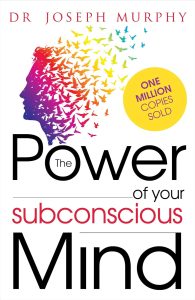
The Most Practical Spiritual Book Ever Written (And Its One Flaw)
Joseph Murphy’s The Power of Your Subconscious Mind has sold millions of copies since its publication in 1963, and there’s a simple reason: it works. Or more precisely, the techniques it teaches work when applied consistently. This is the book that bridges the gap between abstract spiritual philosophy and “here’s what to do tonight before bed.”
Rating: 4.5 out of 5 stars
Murphy was a minister, a scholar of comparative religion, and a relentless pragmatist. He didn’t care much about mystical experiences or cosmic consciousness. He cared about helping people solve their problems. And this book reflects that priority on every page.
What the Book Covers
Murphy divides the book into chapters organized by life area: health, wealth, relationships, career, fear, forgiveness, sleep, and more. Each chapter follows a similar structure: explain the principle, give the technique, share case studies of people who used the technique successfully.
“Your subconscious mind does not argue with you. It accepts what your conscious mind decrees.”Joseph Murphy
The foundational principle is straightforward: your conscious mind is the gatekeeper, and your subconscious mind is the builder. Whatever the conscious mind consistently impresses upon the subconscious through repetition and feeling, the subconscious will build into your experience. Murphy’s techniques are designed to make that impression as efficiently as possible.
The Techniques That Stand Out
The sleep technique: Repeat an affirmation slowly as you fall asleep. Murphy considered this the most powerful method because the subconscious is most accessible at the threshold of sleep. This aligns perfectly with Neville’s SATS, though Murphy’s version uses words where Neville uses images.
The “Thank you” method: Before making any specific request of the subconscious, say “Thank you” for the desired outcome as if it has already occurred. This shifts the emotional state from wanting (which implies lack) to gratitude (which implies fulfillment).
The mental movie technique: Create a short mental scene of the desired outcome and replay it with feeling. Murphy used this less frequently than Neville, but when he did, his instructions were remarkably clear.
The argument-settling technique: When you and another person are in conflict, before sleep, imagine the person happy and at peace. Wish them well sincerely. Murphy reported that this consistently resolved conflicts, sometimes within days.
The Case Studies
Murphy’s case studies are both the book’s greatest strength and, for some readers, a point of resistance. He shares dozens of stories about people who healed diseases, attracted wealth, found partners, and overcame fears using subconscious techniques.
Some of these stories strain credulity. Tumors dissolving overnight. Sudden windfalls appearing from nowhere. Murphy presents them matter-of-factly without much qualification. Whether you accept each case study literally or read them as illustrative examples, the principles behind them are sound.
“Think good, and good follows. Think evil, and evil follows. You are what you think all day long.”Joseph Murphy
The One Flaw
Murphy is repetitive. The core teaching could probably fit into a book half this length. By the midpoint, you’ve grasped the principle, and the remaining chapters apply it to different life areas without much new conceptual ground. This isn’t necessarily a bad thing, because repetition is how the subconscious learns, and reading the same principle applied in different contexts deepens understanding. But if you’re the type of reader who wants constant novelty, you’ll feel the repetition.
My recommendation: read it straight through once. Then use individual chapters as reference material when you’re working on a specific area of life.
How It Compares to Neville’s Work
Murphy is more accessible but less profound than Neville. He gives you the what and the how. Neville gives you the what, the how, and the why at a metaphysical level. Murphy’s book is the better starting point for practical application. Neville’s work is where you go when you want to understand the deeper mechanics.
They’re complementary, not competitive. I recommend reading Murphy first for the practical toolkit, then reading Neville for the philosophical framework that explains why the toolkit works.
Who This Book Is For
- Complete beginners to subconscious programming who want clear, step-by-step methods
- Practical-minded people who want results before philosophy
- Anyone dealing with a specific problem (health, money, relationships) who wants a targeted approach
- Readers who learn best through case studies and examples
Who Might Struggle With It
- Experienced practitioners who already know the core principles (it may feel too basic)
- Readers who are put off by miraculous-sounding case studies
- Those who prefer a more mystical or poetic approach to this material
Key Takeaways
- The subconscious mind accepts whatever the conscious mind impresses upon it with feeling and repetition.
- The threshold of sleep is the optimal time for subconscious programming.
- Gratitude is a powerful bypasser of doubt and resistance.
- What you think about others, you create for yourself. Bless, don’t curse.
- Consistency matters more than intensity. Gentle, repeated impressions outperform desperate, one-time efforts.
A Practice From This Book
Choose one area of your life where you’d like improvement. Craft a single affirmation in present tense: “I am healthy and strong.” “Wealth flows to me freely.” “I am at peace in all my relationships.” Tonight, repeat this affirmation slowly and with feeling as you fall asleep. Do it for ten consecutive nights. Then assess what has shifted, both internally and externally.
Murphy’s genius was making the invisible visible and the mystical practical. This book may not be the deepest text on consciousness you’ll ever read, but it might be the most useful. And usefulness, in this work, is what matters most.
Enjoyed this review?
Buy This Book on Amazon As an affiliate, we may earn a small commission at no extra cost to you.