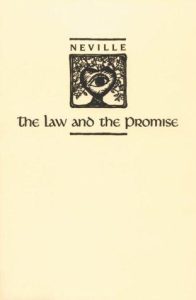
Most Neville Goddard books give you theory. The Law and the Promise gives you evidence, or at least, the closest thing to evidence that Neville ever compiled. Published in 1961, this is essentially a collection of letters from people who applied Neville’s teachings and reported specific, tangible results. He organized their stories by theme, added his own commentary, and created something unique in the Neville canon: a book that shows rather than tells.
I came to this book after reading four of Neville’s other works and finding myself stuck in an odd place. I understood the theory, assume the feeling of the wish fulfilled, persist in it, let reality conform. I could explain it to someone else. But I wasn’t consistently doing it, partly because a skeptical part of me kept asking: does this actually work for regular people, or just for Neville?
This book answered that question in a way the theoretical texts couldn’t.
How the Book Is Structured
Each chapter focuses on a different aspect of imagination, “The Law,” “Dwell Therein,” “Turn the Wheel Backward,” “There Is No Fiction,” and so on. Within each chapter, Neville shares multiple firsthand accounts from students and audience members who wrote to him describing their experiences. Then he ties the stories back to the principle at work.
The stories range from mundane to extraordinary. A woman who imagined a specific apartment in detail and found it the next week. A man who visualized a business deal closing and had it happen within days. Someone who reversed a medical diagnosis. Someone who reconciled an estranged relationship. The specificity of many accounts is what gives them weight, people describe exact scenes they imagined, exact circumstances that followed, and the timeline between the two.
“Man’s responsibility, then, is to imagine and to feel what is true. Imagination and feeling are the very source of action. Feeling what is true initiates its own fulfilment.”
– Neville Goddard, Chapter 1: The Law
The Stories That Stuck With Me
One account I keep returning to involves a woman who wanted to sell her house. She’d had it on the market for months with no bites. After attending one of Neville’s lectures, she went home and imagined herself in a new location, looking back on the sale as a completed event. She felt the relief and satisfaction of it being done. Within ten days, the house sold, to a buyer who hadn’t even been looking in her area.
What makes this story compelling isn’t the result (houses sell every day) but the specificity of the inner work. She didn’t just “think positive.” She constructed a precise scene (herself in a new place, already moved) and felt it as real. The method is consistent with everything Neville taught, and the speed of the result caught my attention.
Another story describes a man in the hospital who was told he’d need surgery. He spent two nights imagining himself already recovered, walking out of the hospital, shaking the doctor’s hand and saying “thank you, I won’t be needing that surgery.” He was discharged without surgery three days later when his condition unexpectedly resolved. Again, maybe coincidence. But enough of these stories stack up that coincidence starts feeling like the less likely explanation.
What Neville Adds Between the Stories
Neville doesn’t just curate stories: he uses them as launching points for teaching. His commentary between accounts is some of his clearest writing. Free from the dense biblical exegesis of Your Faith Is Your Fortune, he speaks plainly here about how imagination operates:
“Determined imagination, thinking from the end, is the beginning of all miracles. I would define that which is not miraculous as that which is commonplace and of no consequence; by that definition, everything accomplished by self-conscious imagination is miraculous.”
– Neville Goddard, Chapter 2: Dwell Therein
There’s a warmth in this book that’s missing from some of his more philosophical works. You can tell Neville genuinely delighted in his students’ successes. He writes about them with a teacher’s pride. Not “I told you so,” but “you see? You had this power all along.”
The Chapter That Changed My Practice
“Turn the Wheel Backward” is a chapter about revision, using imagination not just to create the future, but to rewrite the past. Neville argues that you can take any unpleasant event that’s already happened, replay it in your imagination as you wish it had gone, feel the revised version as real, and watch your present circumstances shift in response.
I was deeply skeptical of this. Changing the future through imagination is one thing. You can at least construct a plausible mechanism involving behavior change, selective attention, and confirmation bias. But revising the past? That felt like magical thinking of the highest order.
Still, I tried it. I took a specific professional rejection that had been gnawing at me for months. In my imagination, I revised the scene. Instead of the rejection, I received enthusiastic acceptance. I felt the relief and joy of it. Did this for three nights before sleep.
The original rejection didn’t magically reverse itself. But something shifted. The emotional charge around it dissolved. I stopped rehearsing the disappointment. And within a few weeks, a different opportunity appeared, one that turned out to be significantly better than what I’d originally wanted. Make of that what you will.
Where This Book Comes Up Short
The obvious criticism is that these are unverified anecdotes from self-selected people who already believed in Neville’s teachings. There’s no control group, no independent verification, no consideration of alternative explanations. As evidence, this is weak. As inspiration, it’s powerful. Know which one you’re getting.
There’s also a survivorship bias issue. Neville presumably received letters from people whose imaginal acts didn’t work, whose visualizations produced nothing, whose assumptions went unfulfilled. Those letters didn’t make the book. The result is a collection that’s inevitably skewed toward success, which could give newcomers unrealistic expectations about how consistently these techniques work.
The writing, while clearer than some of Neville’s other works, still gets repetitive. The same principle is illustrated twelve different ways, and while each story is interesting individually, reading them back-to-back can feel redundant. I’d actually recommend reading this book one chapter at a time, spaced out over weeks, rather than cover-to-cover.
A Practice Inspired by This Book
The revision technique from “Turn the Wheel Backward” is worth trying yourself. Here’s a simplified version:
Before bed tonight, think of one moment from today that went badly, an awkward conversation, a missed opportunity, a frustrating interaction. Replay it in your mind, but change the outcome. See it going the way you wish it had. Hear the words you wish were spoken. Feel the satisfaction of the revised version. Don’t try to force belief, just feel the scene as vividly as you can, as if it’s a real memory.
Do this nightly for a week, always revising one moment from the day. Pay attention to two things: first, whether your emotional relationship with those events changes. Second, whether the patterns that created them start shifting. Most people notice the emotional shift within days. The pattern shifts take longer, but they tend to follow.
Final Assessment
This isn’t Neville’s deepest book, and it’s not his most practical (that honor goes to Feeling Is the Secret). But it fills a gap nothing else in his catalog fills: proof of concept. When you’ve read the theory and learned the technique but still find yourself wondering “does this actually work?”, The Law and the Promise offers forty-plus real people saying yes, with specifics.
Whether that convinces you depends on your relationship with anecdotal evidence. For me, it was the book that moved Neville’s teachings from “interesting philosophy” to “I should probably test this seriously.” And when I did test it seriously, my own results started looking uncomfortably similar to the stories in this book.
That’s either powerful evidence or powerful confirmation bias. After three years, I still don’t know which. But I keep practicing anyway.
Enjoyed this review?
Buy The Law and the Promise on Amazon As an affiliate, we may earn a small commission at no extra cost to you.