The Tight Shoe
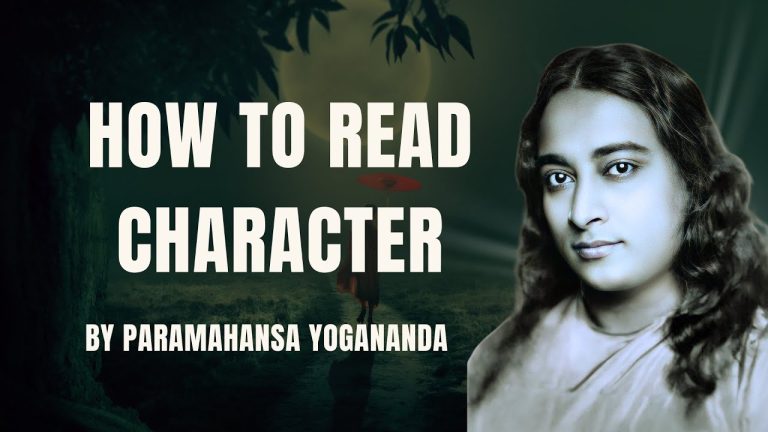
There’s an analogy Yogananda used about death that I’ve never been able to shake. He compared it to removing a tight shoe at the end of a long day. That’s it. Not a catastrophe, not a punishment, not an ending, just relief.
“The body is only a garment. How many times you have changed your clothing in this life, yet because of this you would not say that you have changed. Similarly, when you give up this bodily dress at death you do not change. You are just the same, an immortal soul.”
– Paramahansa Yogananda
I remember the first time I read those words. I was in a period where death felt very close. Not my own, but someone I loved. And the fear was constant, this low hum of dread underneath everything. Then I came across this passage, and something in my chest loosened. Not because I was suddenly convinced of an afterlife. But because the frame shifted. What if the thing I was most afraid of was just… taking off a shoe?
That reframe matters. Not because it eliminates grief, it doesn’t, and it shouldn’t. But because it changes the texture of the fear. And Yogananda didn’t offer this as a comforting platitude. He spoke from direct experience.
The Man Who Came Back
Chapter 43 of Autobiography of a Yogi is one of the most extraordinary chapters in any spiritual text I’ve read. Yogananda’s guru, Sri Yukteswar, had died on March 9, 1936. Yogananda was devastated. Months passed. And then, in a hotel room in Bombay, Sri Yukteswar appeared to him. Not as a wisp or a feeling, but in a tangible, resurrected body.
Yogananda describes touching him, embracing him. He writes about the texture of Sri Yukteswar’s flesh, the warmth of it. And then Sri Yukteswar spoke, at length, in detail, about what happens after death. He described the astral world, the causal world, the progression of the soul through finer and finer planes of existence.
Now, you can take that account literally or you can take it as metaphor. I don’t think it matters as much as people assume. What matters is the teaching embedded in it: consciousness doesn’t stop. The person you are, the awareness that’s reading these words right now, isn’t produced by your brain like steam from a kettle. It exists independently of the body. The body is a vehicle. When the vehicle is done, you step out.
Not Wishful Thinking, Direct Knowledge
What separates Yogananda’s teaching on death from ordinary consolation is that he didn’t treat it as a belief. He treated it as something you can know.
Through deep meditation, Yogananda taught, a person can experience themselves as consciousness rather than body. Not as a concept, as a lived reality. When you’ve directly experienced that you exist apart from the physical form, death loses its absolute power. It becomes a change of state rather than an annihilation.
This is fundamentally different from faith. Faith says, “I believe I’ll continue after death.” Direct experience says, “I’ve already tasted what I am beyond this body, and it’s more real than the body itself.”
Yogananda spent decades teaching meditation practices specifically designed to give people this experience. The whole architecture of Kriya Yoga, as he presented it, is aimed at one thing: helping you realize, through your own direct perception, that you are not the body.
What Happens When You Die, According to Yogananda
Yogananda’s description of the death process is surprisingly specific, and surprisingly gentle.
He taught that at the moment of death, life force withdraws from the extremities toward the spine and brain. Consciousness narrows and then, if the person is spiritually prepared, expands enormously. The soul leaves through the spiritual eye (the point between the eyebrows) and enters the astral world.
The astral world, as Sri Yukteswar described it to Yogananda, isn’t some vague cloudy realm. It’s a world of light, color, and beauty that makes the physical world look pale by comparison. Souls there have astral bodies, luminous, free of disease, capable of changing form at will. They continue to learn, to grow, to work out the tendencies (karma) that weren’t resolved in physical life.
Eventually, the soul moves through the astral world to the causal world, a realm of pure ideas and bliss, and ultimately back to the Infinite, the source of all things. Or, if there’s still unresolved karma, it returns to a physical body. Reincarnation isn’t punishment. It’s another opportunity.
The key teaching here is that nothing is lost. Not your identity, not your relationships, not the love you’ve given or received. Yogananda was emphatic about this:
“Death is not the end; it is merely a transition from one state of being to another. The soul is immortal. It existed before birth and it will exist after death. What you call death is merely the soul’s casting off of its physical encasement.”
– Paramahansa Yogananda
The Grief Is Still Real
I want to be careful here, because none of this means grief is wrong or unnecessary. Yogananda himself grieved deeply when Sri Yukteswar died. He wept. He felt the absence like a wound. Spiritual understanding doesn’t make you a robot. It doesn’t bypass the human experience of loss.
But it does give loss a different floor. There’s a bottom to it. The grief is real, but beneath the grief is a bedrock knowing that the person you love still exists, still IS, in a way that the physical separation can’t touch.
I think that’s the comfort Yogananda offers. Not the denial of pain, but a wider context for it. You’re allowed to grieve and simultaneously know that death is not what it appears to be. Those two things can coexist.
Why We’re So Afraid
If death is really just taking off a tight shoe, why does it terrify us so completely?
Yogananda’s answer is straightforward: identification. We’ve confused ourselves with the body so thoroughly that the end of the body feels like the end of us. It’s as if you’d worn the same coat for seventy years and forgotten you existed without it. The coat gets old and starts to fall apart, and you panic, because you think you’re falling apart.
Every spiritual practice Yogananda taught, meditation, pranayama, Kriya Yoga, is designed to loosen that identification. Not to reject the body or treat it as worthless, but to remember what you are underneath it. When that remembering happens (even briefly) the fear of death changes fundamentally.
It doesn’t disappear overnight. I’m not going to pretend I’ve eliminated my own fear of death. But I’ve had moments in meditation, fleeting, quiet moments, where the boundary between “me” and “not me” dissolved just enough to glimpse what Yogananda was talking about. And in those moments, death didn’t feel like an enemy. It felt like a door I’d walked through before.
A Practice: Loosening the Identification
Here’s a simple practice drawn from Yogananda’s teachings that you can do right now. It takes about five minutes.
Step 1: Sit comfortably with your eyes closed. Take a few slow breaths.
Step 2: Bring your attention to your right hand. Feel the sensations there, warmth, tingling, weight. Now silently say to yourself: I am aware of my hand, but I am not my hand.
Step 3: Move your attention to your chest. Feel your heartbeat, the rise and fall of breath. Say to yourself: I am aware of this body, but I am not this body.
Step 4: Bring your attention to your thoughts. Watch them pass like clouds. Say: I am aware of these thoughts, but I am not these thoughts.
Step 5: Now rest in whatever remains. When you strip away the hand, the body, the thoughts, what’s left? There’s still an awareness there. Still a “you” that’s watching all of it. Sit with that awareness for a minute or two. Don’t try to name it. Just feel it.
That awareness, the one that’s watching, is what Yogananda says survives death. It’s what you are beneath the tight shoe.
The Living Don’t Grieve Alone
One last thing that I find particularly moving in Yogananda’s teachings. He didn’t just say the dead continue to exist. He said they continue to care. The love between souls doesn’t evaporate at death. Those who’ve passed still hold us in their awareness, still send their blessings, still exist in relationship with us, even when we can’t perceive them.
After Sri Yukteswar’s resurrection appearance, Yogananda asked his guru if he was truly happy in the astral world. Sri Yukteswar’s response was essentially: yes, but he still felt the pull of love toward those he’d left behind. The bond was unbroken.
I find that unbearably beautiful. The idea that love is the one thing that doesn’t die, that it’s more durable than bone, more lasting than a solar system. Yogananda staked his entire teaching on this: that consciousness is eternal, that love is the fabric of that consciousness, and that what we call death is just the moment when a soul remembers both of those things at once.
The tight shoe comes off. And what’s underneath has been whole the entire time.