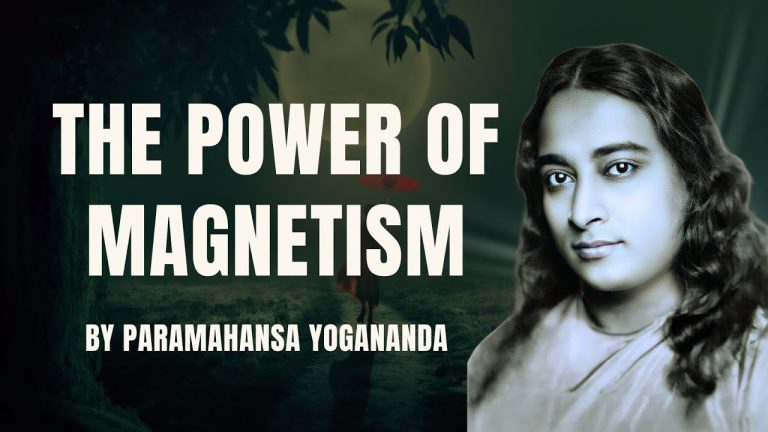
He Stood Before American Audiences and Called Yoga a Science
When Paramahansa Yogananda arrived in the United States in 1920, he didn’t present himself as a religious leader asking for faith. He presented himself as a scientist of consciousness offering verifiable results. This distinction mattered enormously to him, and it shaped how an entire generation of Westerners encountered Eastern spirituality.
I first noticed this pattern when I was reading Autobiography of a Yogi for the second or third time. Yogananda kept using the word “scientific” in places where I expected “spiritual” or “mystical.” He described meditation techniques as “scientific methods.” He called the yoga path a “scientific highway to God.” He wasn’t being casual with these words, he was making a deliberate argument.
That argument, I’ve come to believe, is one of the most important things he contributed to modern spiritual thought. And it’s more relevant now than when he first made it.
What Yogananda Meant by “Scientific”
Yogananda wasn’t claiming that yoga had been validated by peer-reviewed studies in Nature or Science. His use of the word “scientific” pointed to something more fundamental: the idea that spiritual truths can be tested, verified through personal experience, and reproduced by anyone who follows the method correctly.
“The true basis of religion is not belief, but intuitive experience. Intuition is the soul’s power of knowing God. To know what religion is really all about, one must know God.” – Paramahansa Yogananda, Chapter 35
This is a radical claim when you sit with it. Yogananda was saying that religion, at its best, isn’t about accepting doctrines on authority. It’s about conducting experiments on your own consciousness and discovering truths for yourself. The meditation technique is the experiment. The experience of expanded awareness is the data. And the fact that millions of practitioners across thousands of years have reported consistent results is the replication.
In this framework, a saint isn’t someone with superior faith. A saint is someone who has successfully completed the experiment. They’ve followed the method, obtained the results, and can teach others to do the same.
The Laboratory of the Body
One of the things that drew me to Yogananda’s teaching was how physical it is. This isn’t abstract theology. Kriya Yoga, the core technique Yogananda taught, involves specific breathwork, specific postures, specific movements of energy along the spine. It’s as precise as a chemistry procedure.
Yogananda spoke about the body as a laboratory and the spine as an instrument. He described the chakras not as mystical symbols but as actual centers of energy that can be activated through practice. He talked about the cerebral-spinal axis the way a physicist might talk about a circuit, as a system that conducts and transforms energy when properly engaged.
“Kriya Yoga is a simple, psychophysiological method by which human blood is decarbonated and recharged with oxygen. The atoms of this extra oxygen are transmuted into life current to rejuvenate the brain and spinal centers.” – Paramahansa Yogananda, Chapter 26
Now, modern scientists might quibble with some of that specific language, the mechanism he describes doesn’t map neatly onto contemporary biochemistry. But the underlying point stands: Yogananda was attempting to explain spiritual practice in terms of bodily processes. He believed that what we call “spiritual experience” has physical correlates, and that by working with the body systematically, you can produce those experiences reliably.
This was decades before neuroscience started studying meditation’s effects on the brain. Yogananda was already insisting that the inner world of consciousness is as lawful and investigable as the outer world of matter.
Why This Distinction Mattered to His Audience
To understand why Yogananda emphasized the scientific angle so heavily, you have to understand his audience. He arrived in America during a period of enormous cultural faith in science and technology. The early 20th century was the era of Edison, Einstein, and the rapid expansion of industrial technology. Americans trusted science. Many had grown skeptical of traditional religion.
Yogananda saw this clearly and met people where they were. He didn’t ask skeptics to abandon their rational orientation. He invited them to apply it. “Don’t believe me,” he essentially said. “Practice the technique. See for yourself. If the results don’t come, discard the method. That’s the scientific approach.”
This posture earned him credibility with people who would have dismissed a purely devotional teacher. And it attracted a type of seeker who wanted rigor, who wanted more than “just have faith.”
I identify with those seekers. My own background is skeptical by nature. I don’t accept claims on authority easily. When I found Yogananda’s work, the fact that he invited testing rather than demanding belief was what kept me reading. And when I started practicing meditation with the kind of regularity he recommended, I began having experiences that confirmed, for me, in my own laboratory, that he was onto something real.
Where Science and Yogananda’s Teachings Actually Converge Today
I think Yogananda would have been delighted by this: modern science has been steadily catching up to some of his claims.
Neuroscience has documented measurable changes in brain structure and function among long-term meditators. Studies have shown increased gray matter density, altered default mode network activity, and changes in stress hormone levels. The emerging field of contemplative science treats meditation as a legitimate object of empirical investigation.
Research on breathwork, the foundation of Kriya Yoga, has shown that controlled breathing techniques directly influence the autonomic nervous system, reducing sympathetic (fight-or-flight) activation and increasing parasympathetic (rest-and-digest) function. Yogananda’s claim that pranayama techniques affect the body’s physiology has been broadly confirmed, even if the specific mechanisms he described were framed in the language of his era rather than ours.
None of this “proves” Yogananda’s metaphysical claims about God, the soul, or cosmic consciousness. But it does validate his fundamental insight: that the practices he taught produce measurable, reproducible effects on the human mind and body. And that’s exactly what he meant by calling them scientific.
The Experiment You Can Run Yourself
In the spirit of Yogananda’s own approach, here’s a simple experiment drawn from his teachings that you can conduct on yourself. No belief required, just honest observation.
The 30-Day Breath Awareness Practice:
Step 1: Each morning, before checking your phone or starting your day, sit comfortably with your spine straight. Close your eyes.
Step 2: Breathe naturally through your nose. Don’t try to control the breath. Simply observe it, the cool air entering, the warm air leaving, the slight pause between inhalation and exhalation.
Step 3: When your mind wanders (and it will), gently return attention to the breath. No frustration. No judgment. Just return.
Step 4: Do this for ten minutes. Use a timer so you’re not guessing.
Step 5: Immediately after, take thirty seconds to notice your mental state. Are you calmer than when you sat down? Is there more space between your thoughts? Write a single sentence in a journal describing what you observed.
Step 6: Repeat for thirty consecutive days. At the end, review your journal entries and note any patterns.
This is Yogananda’s scientific approach in miniature. You’re not being asked to believe that breath awareness will change your life. You’re being asked to practice it consistently and observe what happens. Let the data, your own direct experience, speak for itself.
Religion Without Dogma, Science Without Reductionism
What I find most compelling about Yogananda’s position is that it avoids the two extremes that dominate our cultural conversation about spirituality. On one side, there’s dogmatic religion that demands belief without evidence. On the other, there’s materialist reductionism that dismisses any inner experience as “just chemicals.”
Yogananda carved out a middle path. He respected the scientific demand for evidence and reproducibility. But he also insisted that consciousness itself is a valid domain of investigation, that the inner world is as real as the outer one, and that dismissing subjective experience as meaningless is not scientific but rather a philosophical bias dressed up as science.
I’ve found this middle path to be the most honest place to stand. I don’t accept spiritual claims blindly. But I also don’t dismiss them reflexively. I practice the techniques. I observe the results. And when those results are consistent and meaningful, I take them seriously. Not as articles of faith, but as data points in an ongoing experiment.
Yogananda gave me permission to be both a skeptic and a seeker. To demand evidence and remain open to mystery. To treat my meditation practice as seriously as a scientist treats a research protocol, while also being willing to be astonished by what I find.
That, I think, is what he meant by calling religion scientific. Not that the laboratory can replace the temple. But that the temple, properly understood, is a laboratory, and you are both the scientist and the experiment.